
Discover the magic of the Taj Mahal full moon night tour. Get insider tips on tickets, timings, costs, and what to expect when you see the Taj at night bathed in silver moonlight.
I still remember the first time I stood in front of the Taj Mahal at night. The crowds had vanished. The daytime heat had dissolved into a cool Agra breeze. And there it was — this magnificent monument, glowing silver-white under a full moon, looking almost translucent, as if carved from frozen moonlight rather than marble. Nobody in our group spoke for a full minute. That silence, that shared awe, is something a photograph will never capture.
If you have ever scrolled past a picture of the Taj Mahal on a full moon night and felt your heart skip, you already know why thousands of travelers from across the world put this experience on their bucket list. But here's the thing most travel blogs won't tell you: booking a Taj Mahal full moon night tour requires planning, patience, and a handful of insider knowledge that can mean the difference between a magical evening and a frustrating one. This guide gives you every single detail you need — no fluff, no filler, just the honest, practical truth from someone who has walked those moonlit grounds more times than I can count.
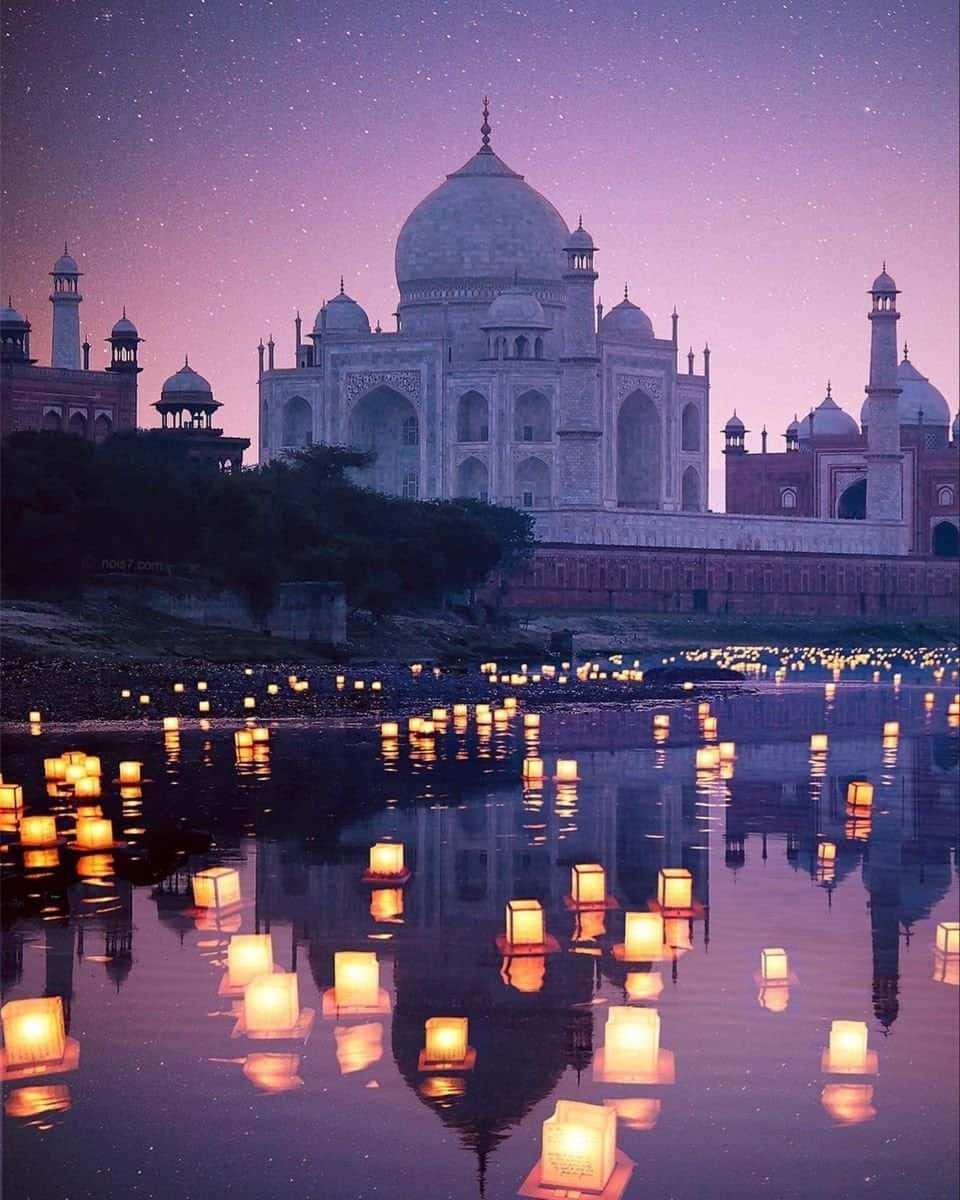
The Taj Mahal transforms into an ethereal vision under the night sky — a sight few travelers ever forget.
During the day, the Taj Mahal welcomes anywhere between 40,000 to 70,000 visitors. The noise, the selfie sticks, the guided groups shouting over each other — it can feel more like a crowded railway station than one of the Seven Wonders of the World. The night tour strips all of that away.
Only 400 visitors are permitted each night, divided into batches of 50. You get 30 minutes inside the complex. That might sound short on paper, but trust me — those 30 minutes feel suspended in time. The marble of the Taj absorbs and reflects moonlight in a way that scientists have studied and poets have tried to describe for centuries. On a clear full moon night, the monument appears to shift colors — from warm ivory to pale blue to ghostly silver — depending on where you stand and how the clouds drift.
Shah Jahan commissioned this monument in 1632 as an eternal testament to love for his wife Mumtaz Mahal. According to historical accounts documented by the Archaeological Survey of India, the emperor himself used to view the completed Taj by moonlight from the Agra Fort. When you stand there under the same moon, you're not just sightseeing — you're stepping into a story that has endured for nearly four hundred years.
Let me walk you through the entire process because most sources online give you scattered, incomplete information.
The Taj Mahal night tour operates only five nights per month — the night of the full moon, plus two nights before and two nights after. The tour does not run on Fridays or during Ramadan. Before planning your trip, check the full moon dates for Agra and work your entire itinerary around those dates. Many travelers fly into India without confirming this and end up disappointed.
Tickets must be purchased at least 24 hours before your intended visit. You can buy them at the ASI office located at 22, Mall Road, Agra. Foreign nationals pay ₹750 (approximately $9 USD), while Indian citizens pay ₹510. You'll need a valid passport — no exceptions. The demand is high and slots fill quickly, especially between October and March, which is peak tourist season.
Book your full moon night tour through an experienced operator like Trip to Taj Mahal to avoid the stress of navigating the ASI booking process yourself. They handle ticket procurement, transportation from your hotel, and provide a knowledgeable guide who can share stories you won't find in any guidebook.
Night tour visitors gather at the Shilpgram complex, approximately 500 meters from the eastern gate. You'll go through airport-style security screening. From there, you're escorted in a batch of 50 to the main viewing area near the Great Gate (Darwaza-i-Rauza). The viewing takes place between 8:30 PM and 12:30 AM, split into eight timed batches.
| Visitor Category | Night Tour Price | Day Tour Price (Comparison) | Notes |
|---|---|---|---|
| Foreign Nationals | ₹750 (~$9) | ₹1,100 (~$13) | Passport required at entry |
| Indian Citizens | ₹510 (~$6) | ₹50 (~$0.60) | Valid government ID needed |
| SAARC/BIMSTEC Citizens | ₹510 (~$6) | ₹540 (~$6.50) | Bangladesh, Nepal, Sri Lanka, etc. |
| Children (under 15) | Free | Free | Must be accompanied by a ticketed adult |
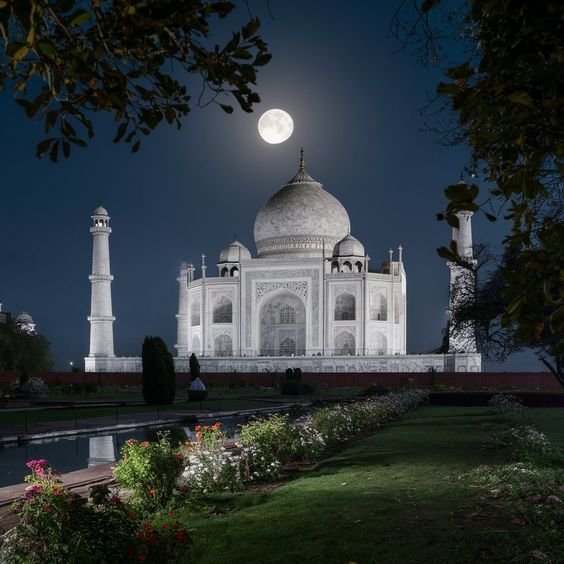
The Taj Mahal on a full moon night — the Makrana marble creates an almost supernatural glow that shifts with the clouds.
The Taj Mahal was built using Makrana marble, a translucent white marble quarried from Rajasthan. This particular marble has a unique crystalline structure that refracts and reflects light differently than other stones. During the day, it appears stark white. At sunset, it turns golden-pink. And under moonlight, it takes on a luminescent blue-silver quality that has genuinely made visitors cry.
I've spoken with geologists who explain that the marble's semi-translucent properties allow moonlight to penetrate slightly below the surface before reflecting back. This creates a soft inner glow — almost as though the building itself is lit from within. Add to this the reflection in the long pool along the central pathway (the char bagh garden), and the effect is doubled. It's mesmerizing in a way that's genuinely difficult to put into words.
Tripod photography is strictly prohibited during the night tour. You can use your phone and handheld camera. To get the best photos, switch your phone to night mode, keep your hands steady, and try resting your elbows on the stone railing for stability. The best shots come from the raised platform near the main gateway.
Not all full moon nights in Agra are created equal. The weather and atmospheric conditions dramatically affect your experience:
The two nights before the full moon are often better than the full moon night itself. Why? Slightly fewer tourists book those dates, so your batch may be smaller. The moon is already 95%+ illuminated, and the visual difference is imperceptible to the naked eye. Seasoned travelers know this trick.
Security at the night tour is tighter than the daytime experience. Here's exactly what you need to know:
I wouldn't be doing my job if I didn't warn you about the common traps that catch first-time visitors:
I've guided hundreds of travelers through India over the years. I've watched them marvel at Rajasthan's forts, gasp at Varanasi's ghats at dawn, and photograph Kerala's backwaters until their phones died. But nothing — absolutely nothing — produces the same response as seeing the Taj Mahal on a full moon night. There's a reason Emperor Shah Jahan chose white marble. There's a reason this monument was designed to interact with light. And there's a reason the Indian government limits access to just 400 souls per night — some experiences are meant to be intimate.
If you're planning your trip to India and have the flexibility to align your dates with the lunar calendar, do it. Rearrange your itinerary. Shift your flights if you have to. The Taj Mahal full moon night tour is one of those rare travel experiences that doesn't just meet the hype — it quietly, breathtakingly exceeds it.
Tickets for the Taj Mahal night tour must be booked at least 24 hours in advance through the Archaeological Survey of India (ASI) office in Agra. You can also book through authorized tour operators like Trip to Taj Mahal. Online booking through the ASI website is sometimes available. A valid photo ID (passport for foreign nationals) is mandatory at the time of booking and entry.
The Taj Mahal night viewing is available for five nights each month — the full moon night, plus two nights before and two nights after the full moon. However, the tour does not operate on Fridays or during the month of Ramadan. The Archaeological Survey of India publishes the schedule monthly on their official website.
Security restrictions during the night tour are stricter than daytime visits. You are allowed to carry only your phone, a small wallet, a water bottle, and your camera (without a tripod). Bags, food items, tobacco products, lighters, and electronic gadgets like laptops or tablets are strictly prohibited.
Absolutely. Seeing the Taj Mahal on a full moon night is a transformative experience that most travelers describe as the highlight of their entire India trip. The marble glows with an ethereal silver-blue luminescence, the crowds are minimal (only 400 visitors per night in small batches), and the silence adds a dimension of intimacy you simply cannot experience during the day.
Each batch of visitors is allowed approximately 30 minutes inside the Taj Mahal complex during the night tour. While this may seem brief, the limited time and small group size create an incredibly focused and memorable experience. Most visitors find the duration perfectly adequate for soaking in the atmosphere and taking photographs.
No, visitors are not permitted to enter the main mausoleum during the night tour. You can view the Taj Mahal from the main gateway (Darwaza-i-Rauza) and the raised marble platform area. Despite this restriction, the exterior view under moonlight is breathtaking and provides the most iconic photographic opportunities.
Let Trip to Taj Mahal handle every detail — from securing your night tour tickets to arranging seamless transportation and expert-guided experiences you'll remember forever.
Book Your Full Moon Night Tour →