A comprehensive, first-hand guide to Taj Mahal tickets, tour timings, prices, and online booking process for domestic and international visitors. Includes sunrise tips, local advice, and money-saving strategies.
There is a moment — fleeting, almost otherworldly — when the first blush of dawn touches the white marble of the Taj Mahal and the entire monument seems to exhale. If you have ever stood in that stillness, breathing in cool Agra air with no one else around, you understand why this UNESCO World Heritage Site draws seven to eight million visitors every year. But here is the truth most travel articles skip: experiencing that moment requires knowing exactly when to arrive, which ticket to buy, and which gate to walk through. Miss any one of those details, and you risk wasting hours in queues or arriving to find the monument closed.
This guide is built on first-hand experience guiding hundreds of international and domestic visitors through the Taj Mahal entry process. Whether you are orchestrating a whirlwind same day Agra tour from Delhi or planning a multi-day cultural journey, you will find every fact, figure, and insider tip you need right here — including exact ticket prices, the online booking process, gate-by-gate navigation, and the scams you must avoid.
The Taj Mahal is not simply a monument — it is an experience governed by precise logistics. The Archaeological Survey of India (ASI) enforces strict rules on entry timings, ticket types, and permitted items. Foreign visitors who arrive without pre-booked tickets during peak season (October through March) can face wait times of 45 minutes to over an hour at the ticket counters alone. Factor in security screening, the walk from the outer gate to the mausoleum, and the ever-shifting crowd dynamics, and the difference between a planned visit and an improvised one can be the difference between transcendence and frustration.
According to UNESCO's official record on the Taj Mahal, the monument was commissioned by Mughal Emperor Shah Jahan in 1632 as an eternal memorial to his wife Mumtaz Mahal. Today, the complex spans 17 hectares and includes the main mausoleum, a mosque, a guest house, and sweeping formal gardens. Understanding its layout before you arrive is half the battle.

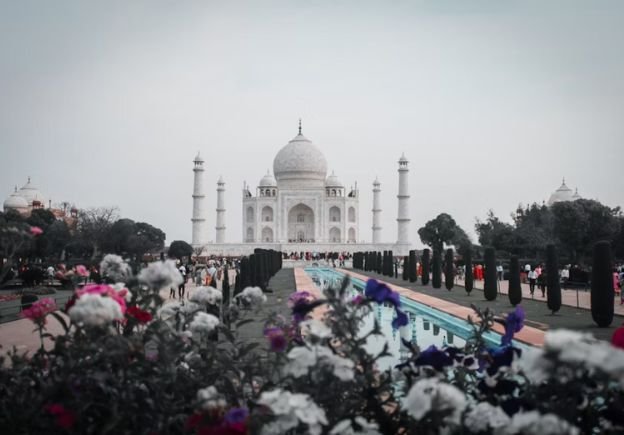
The iconic reflection pool at the Taj Mahal's central garden — arrive early to capture this mirror image without crowds.
One of the most searched questions about Taj Mahal tours is simply: how much does it cost? The answer depends on your nationality, which areas of the complex you wish to access, and whether you visit during the day or on a moonlight night. Below is a comprehensive, up-to-date breakdown.
| Visitor Category | Main Complex Entry | Inner Mausoleum | Total Cost |
|---|---|---|---|
| International Tourists | ₹1,100 | +₹200 | ₹1,300 |
| SAARC / BIMSTEC Nationals | ₹540 | +₹200 | ₹740 |
| Indian Nationals | ₹50 | +₹200 | ₹250 |
| Children (under 15 yrs) | FREE | FREE | FREE |
| Moonlight Viewing (Int'l) | ₹750 | — | ₹750 |
| Moonlight Viewing (Indian) | ₹510 | — | ₹510 |
Prices as per ASI 2025–26 schedule. Subject to revision — verify at asi.payumoney.com before your visit.
The extra ₹200 to enter the inner mausoleum chamber, where the marble cenotaphs of Shah Jahan and Mumtaz Mahal rest under an intricate pietra dura canopy, is one of the most worthwhile upgrades on any Taj Mahal tour. Fewer visitors pay it, so the interior is noticeably less crowded. Do not skip it.
The Taj Mahal is open six days a week — it closes every Friday, when the mosque within the complex hosts Jumu'ah prayers and is reserved for worshippers only. On all other days, gates open 30 minutes before official sunrise and close 30 minutes before official sunset (typically around 06:00–19:00 in summer and 06:30–17:30 in winter, though exact times shift daily with the season).
| Season | Approx. Gate Opening | Approx. Gate Closing | Best Visit Time |
|---|---|---|---|
| Winter (Oct – Feb) | 06:30 | 17:30 | Sunrise — 09:00 |
| Spring (Mar – Apr) | 06:00 | 18:30 | Sunrise — 09:00 |
| Summer (May – Jun) | 05:30 | 19:00 | Sunrise — 08:30 |
| Monsoon (Jul – Sep) | 06:00 | 18:30 | Early morning (fog can be magical) |
| Moonlight Viewing | 20:30 | 00:30 | Full moon ± 2 nights |
Times are approximate and change daily. Check www.tajmahal.gov.in for exact daily timings before your visit.

The Taj Mahal at dawn: warm, apricot-hued light and an almost empty forecourt — this is the hour every serious visitor plans around.
If you take away just one thing from this entire guide, let it be this: the sunrise Taj Mahal experience is categorically different from any other time of day. When gates open at first light, the white marble absorbs the spectrum of dawn colours — blush pink, then amber, then a luminous gold — and the complex is populated by perhaps a few hundred people rather than several thousand. Photographers have unobstructed foreground views of the reflection pool. Couples can stand at the famous "Lady Di bench" without queuing. The morning bird chorus from the manicured gardens adds a natural soundtrack that midday traffic noise eventually drowns.
Aim to be at the East Gate (recommended for sunrise visitors) at least 20 minutes before opening time. Security queues form quickly. Book your ticket the night before online, and keep a printed or digital copy ready to avoid the counter queue entirely.
The Taj Mahal has three main entry gates: South Gate (main gate, busiest), West Gate, and East Gate. Most tour buses drop visitors at the South Gate, making it the most congested. For sunrise visits, the East Gate typically has shorter queues. The West Gate is convenient if you are staying in the Taj Ganj neighbourhood. Ticket counters and ticket verification points exist at all three — if you have a pre-booked e-ticket, head directly to the entry lane and skip the counter entirely.
The Archaeological Survey of India manages online ticket sales through its official payment portal. Here is the exact process:
Touts outside all three gates will offer to sell you tickets, claim the official counters are closed, or insist you need a "special permit." None of this is true. Only purchase tickets from the ASI official website or the ASI counters inside the compound gates. Never hand money to anyone on the street.
Moonlight viewing tickets are available for five nights around each full moon (the night of the full moon, plus two nights before and two nights after). These are sold exclusively online through the ASI portal, with a cap of just 400 visitors per night, making them the most competitive tickets in Indian tourism. Slots for popular months (October, November, February) sell out days in advance. Check the ASI portal and book the moment dates are released — typically 30 days in advance.
Expect a thorough security screening at all gates, comparable to international airport security. X-ray machines and hand searches are standard. The following items are strictly prohibited:
When ascending the plinth to the main mausoleum, visitors must either remove their shoes or wear the complimentary shoe covers (overshoes) provided at the base of the steps. This is non-negotiable and enforced by guards on duty. Shoe covers are included in your entry ticket cost — you will receive them automatically.
Photography is permitted throughout the gardens, on the plinth, and at the exterior of the mausoleum. Inside the inner mausoleum chamber itself, photography is prohibited — this rule is firmly enforced by guides stationed at the entrance. Respect it; the sanctity of the space is part of the experience.
The Taj Mahal is open year-round (except Fridays), but the experience changes dramatically by season. Here is an honest, unfiltered breakdown:
International tourists pay ₹1,100 (approximately $13–$14 USD) for entry to the Taj Mahal main complex. An additional ₹200 is charged to enter the inner mausoleum chamber, where the actual cenotaphs are located. Children under 15 years of age are admitted completely free of charge at all times.
The Taj Mahal is open from 30 minutes before official sunrise to 30 minutes before official sunset, six days a week. It is closed every Friday. The monument is also open for five special moonlight nights per month (the full moon night, plus two nights on either side), from approximately 20:30 to 00:30. Exact daily times vary with the season.
Sunrise is by far the best time to visit. Crowds are minimal, the soft golden light creates stunning photographic conditions, and temperatures are significantly cooler — especially important from April to September. Arriving 15–20 minutes before the gates open at the East Gate is strongly recommended for the most crowd-free experience.
Tickets can be booked through the Archaeological Survey of India's official portal at asi.payumoney.com. Select the date, visitor category, and number of people, then pay via card, net banking, or UPI. You will receive a PDF e-ticket with a QR code that can be scanned directly from your phone at the entry gate. Advance booking is strongly recommended during October–March peak season.
Prohibited items include food and non-water drinks, tripods, selfie sticks, drones, tobacco products, lighters, knives, and large bags. Water in transparent plastic bottles is permitted. X-ray screening and bag checks are conducted at all entry gates — plan accordingly and leave restricted items secured in your hotel room.
In nearly three centuries of travel writing, the Taj Mahal has never been described as disappointing by someone who arrived prepared. The reverse is also true: the visitors who stumble in at 11 AM on a Saturday afternoon without tickets, in summer heat, through the crowded South Gate — they are the ones who say they wished they had planned better. The knowledge in this guide is all you need. Know your ticket price, book online the evening before (or weeks ahead for moonlight slots), reach the East Gate 20 minutes before sunrise, and let the seven wonders of the world do the rest.
For those ready to take the next step and experience the Taj Mahal with expert guidance, curated logistics, and zero stress, explore our handpicked selection of guided packages below.
Let Trip to Taj Mahal handle every detail — from sunrise entry logistics to guided mausoleum tours, private transport, and beyond. Trusted by international travellers from 40+ countries.